

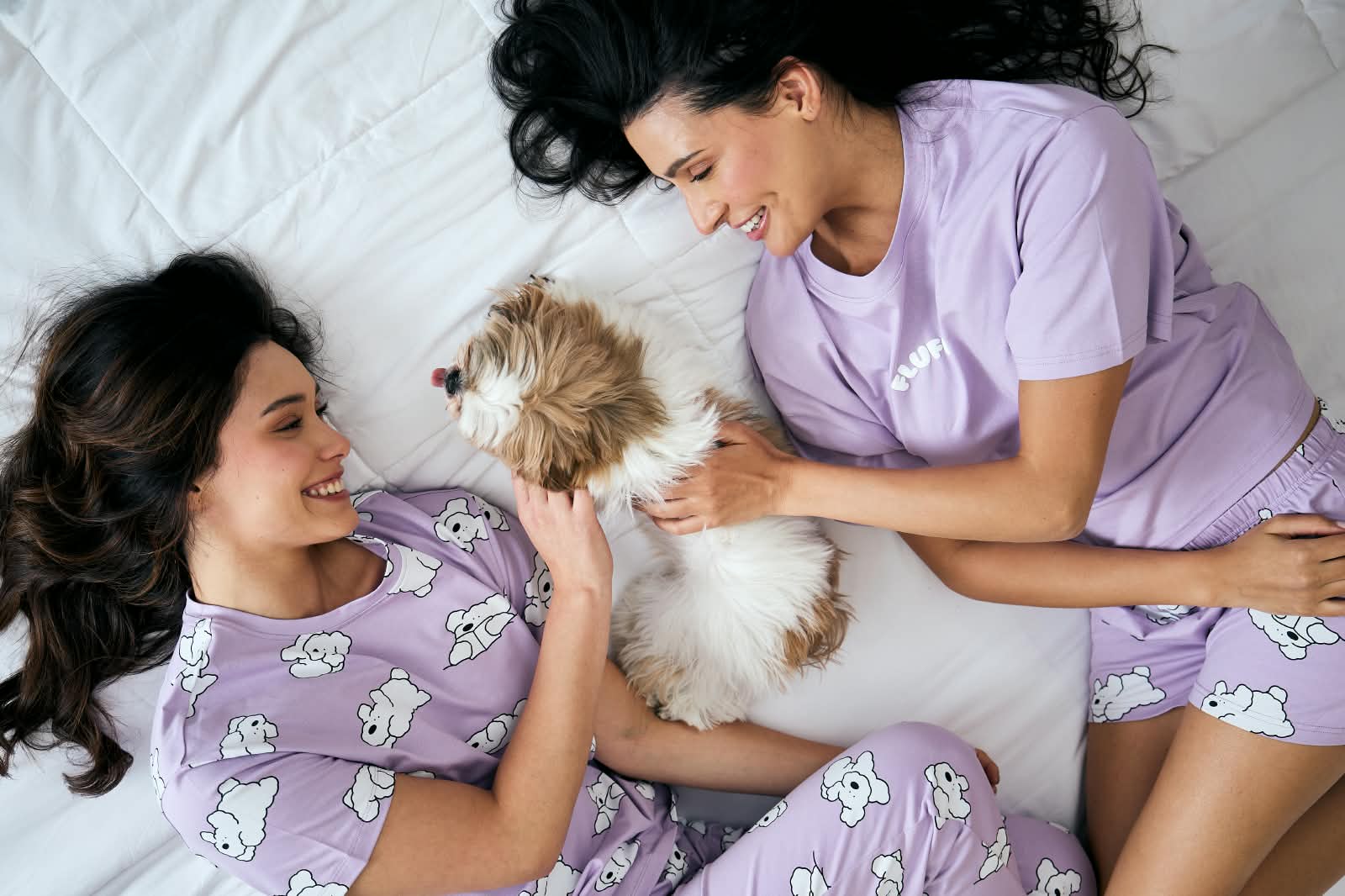
This International Cat Day and International Dog Day, “Pause with Paws” celebrates the strangely satisfying art of sharing a sofa, doing very little and letting the evening be enough.
Mumbai, India | August 2026: There is a particular kind of evening pet parents know well.
One person finally sits down. A cat appears and occupies precisely the part of the sofa they were planning to use. A dog decides a lap is now communal property. The television may be on. A book may remain unread. Someone may have planned to get a few more things done.
Very little happens.
And somehow, the time feels well spent.
That is the idea behind Pause with Paws, a lifestyle thought from SWEET DREAMS spanning International Cat Day on 8 August and International Dog Day on 26 August. Following International Cat Day and heading towards International Dog Day, the campaign looks at something cats and dogs seem to understand instinctively: there comes a point in the day when one can simply stop.
The Rise of Low-Effort Togetherness
Much of modern social life is organised around doing something.
Dinner needs a reservation. A weekend needs a plan. A catch-up needs a venue. A night at home can quickly acquire its own checklist: finish the episode, answer the message, order something, scroll somewhere, prepare for tomorrow.
Pets operate differently.
A dog can consider sitting next to somebody a perfectly complete activity. A cat can spend an extraordinary amount of time sharing a room while appearing to have absolutely no agenda for it.
Their company rarely asks to be entertained.
That makes the human-pet relationship an interesting counterpoint to an increasingly scheduled life. Low-effort togetherness describes those stretches of time where companionship does not have to produce an experience to feel worthwhile.
It may sound uneventful. That is precisely the appeal.
Pets Have Always Been Surprisingly Good at Being Present
There is also scientific interest in what happens when humans spend time around animals.
The US National Institutes of Health notes that studies of human-animal interaction have associated time with animals with outcomes including lower levels of the stress-related hormone cortisol, lower blood pressure, greater feelings of social support, reduced loneliness and improved mood. The NIH also cautions that this remains an evolving area of research and that findings are mixed rather than universal.
A 2022 review of physiological research into human-dog interactions similarly found recurring evidence of increases in heart-rate variability and oxytocin alongside decreases in cortisol, although the research methods and results vary between studies.
Cats deserve their own nuance. A 2023 study examining owners interacting freely with cats in a domestic environment found measurable changes in emotional arousal and physiological responses during those interactions, reinforcing how complex and distinctive human-cat relationships can be.
Researchers have also studied oxytocin as one potential mechanism involved in human-animal bonding. A widely cited review by Andrea Beetz and colleagues proposed that activation of the oxytocin system may help explain some of the psychological and physiological effects observed during positive human-animal interactions.
None of this means owning a pet is a prescription for stress, sleep or wellbeing. Human-animal interaction research is far more individual and complex than that.
What it does make interesting is something pet parents already recognise emotionally: quiet companionship can feel surprisingly restorative.
Perhaps because it requires so little performance.
Dressing for the Hours When Very Little Needs to Happen
Clothing is one of the simplest physical signals that the working part of the day has ended.
Shoes come off.
Daywear goes away.
Sleepwear comes on.
For Pause with Paws, the garments sit quietly inside the idea rather than carrying it too literally. The two lavender sets are simply the clothes around the slower part of the day: easy in mood and at home in the stretch between switching off and going to sleep.
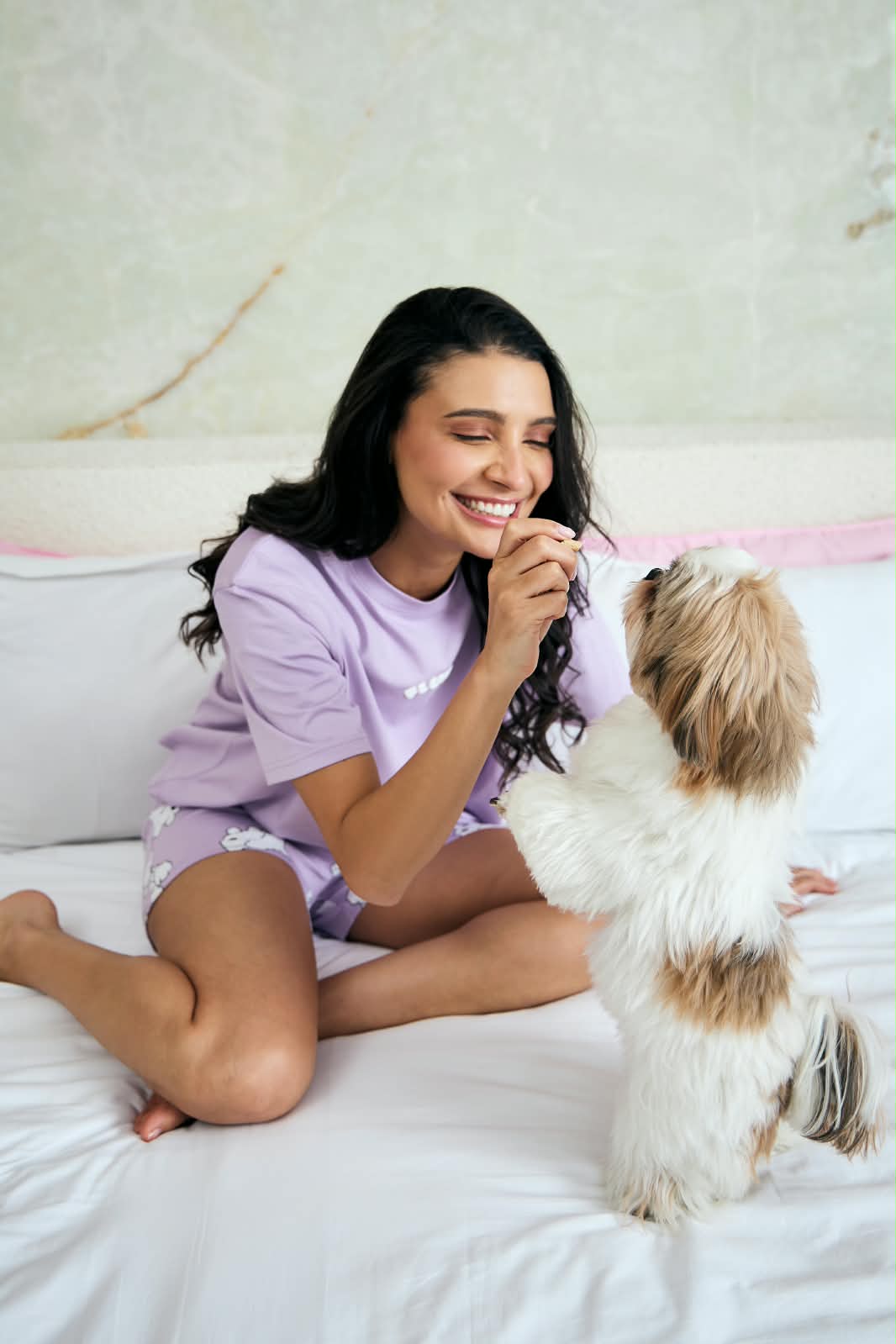
The Lavender Short Set works for the earlier part of that wind-down—when the evening still moves between the sofa, the kitchen and a little time with a pet underfoot. Its shorter silhouette keeps the feeling light and informal, without turning the moment into an occasion.
The Lavender Wide Pyjama Set takes the same palette into a more settled shape. The wider silhouette feels suited to the longer, slower hours: reading, watching something, stretching out on the sofa, or letting a dog or cat quietly decide where everyone is sitting.
Together, the two sets support the larger thought without over-explaining it. Pause with Paws is not really about dressing for pets. It is about dressing for the part of home life in which very little needs to happen—and where companionship, comfort and rest can be enough.
Getting ready for bed can begin long before one’s head reaches the pillow.
