

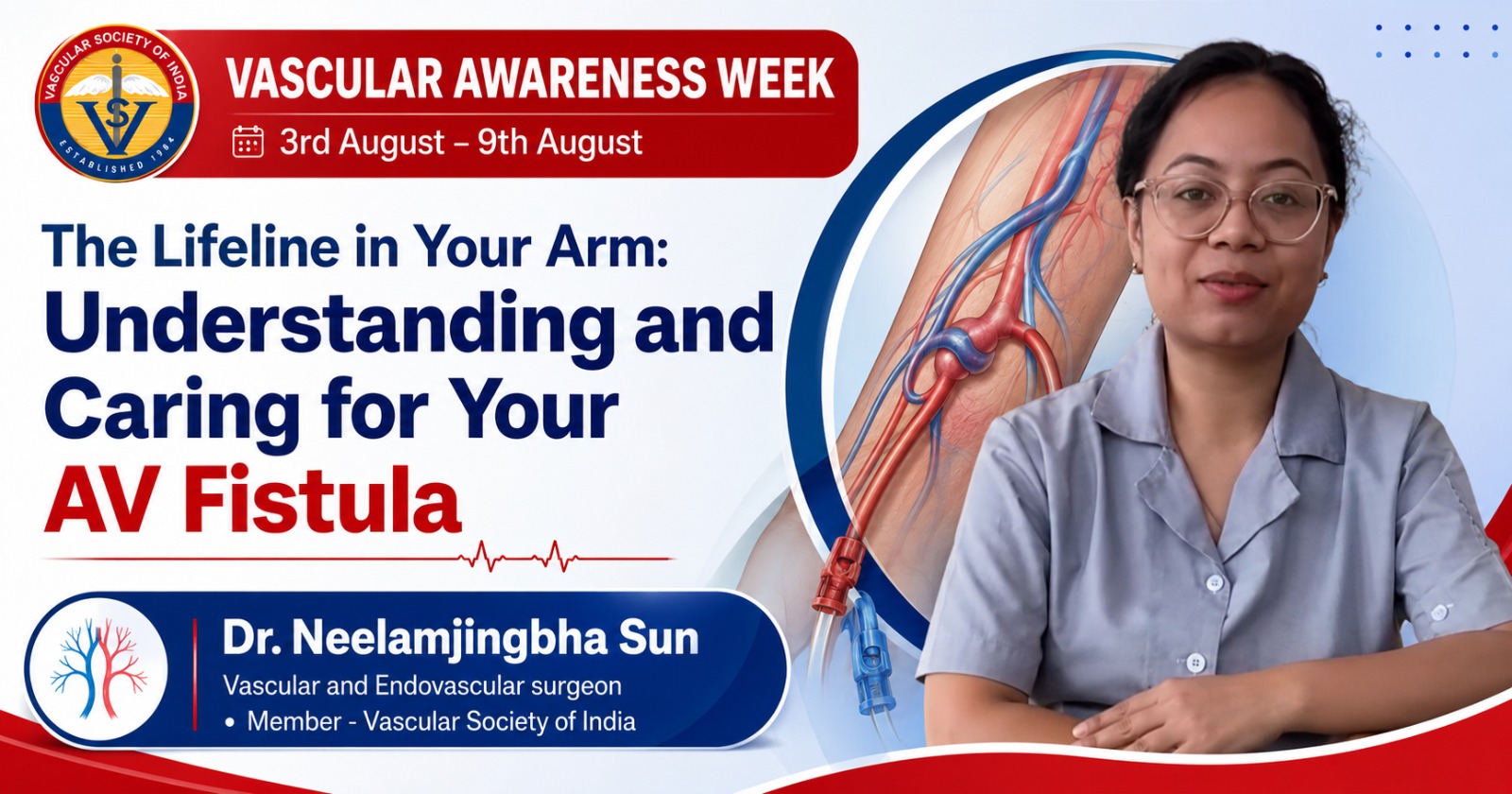
Vascular surgeons play a central role in the management of patients with chronic kidney disease, particularly those who require hemodialysis. Their role includes creating vascular access for dialysis, managing complications related to the access, and placing hemodialysis catheters when required.
One of the most commonly used forms of vascular access is an Arteriovenous Fistula (AV Fistula or AVF).
What Is an AV Fistula?
An AV Fistula is a surgically created connection between an artery and a vein, usually in the arm. This connection allows the vein to develop adequate blood flow and strength so that it can be repeatedly used for hemodialysis.
AV Fistula creation is generally performed as an outpatient surgical procedure under local anaesthesia.
Before the procedure, the vascular surgeon performs a clinical examination and usually conducts an ultrasound assessment of the blood vessels. This helps determine which artery and vein are most suitable for creating the fistula.
The most common types include:
- Radio-cephalic AV Fistula – created in the distal forearm/wrist region.
- Brachio-cephalic AV Fistula – created around the elbow region.
How Is an AV Fistula Created?
During the procedure, the vascular surgeon carefully exposes the selected artery and vein. The vein is then surgically connected to the artery.
This requires precise microvascular dissection and anastomosis. Fine polypropylene sutures are used to create the connection, sometimes using sutures thinner than a strand of hair.
Once the connection is completed, the skin is closed and a dressing is applied over the surgical site.
Understanding the “Thrill” of an AV Fistula
After a successful AV Fistula creation, patients can usually feel a characteristic vibration along the vein. This is known as the “thrill.”
A thrill feels like a gentle, machine-like vibration when the fingers are placed over the fistula.
Patients and their attendants are taught to check this thrill regularly because it provides an important indication that blood is flowing through the AV Fistula.
If the thrill suddenly becomes weaker or disappears, the patient should promptly contact the vascular surgeon. This may indicate a problem such as thrombosis (blood clot) or another obstruction affecting the fistula.
Caring for the AV Fistula After Surgery
Proper care immediately after surgery is important for successful healing and maturation of the fistula.
Patients should:
- Follow the recommended dressing schedule.
- Watch for excessive swelling around the surgical site.
- Look for any bleeding.
- Perform soft-ball exercises when advised by the treating surgeon.
- Avoid lifting heavy weights with the affected arm.
- Regularly check the thrill.
These measures can help support the maturation of the vein and allow the AV Fistula to become suitable for dialysis.
When Can an AV Fistula Be Used for Dialysis?
An AV Fistula generally requires time to mature before it can be used safely for hemodialysis. In many patients, it may become suitable for use at around 6 weeks after creation, although the exact timing varies depending on individual maturation and the assessment of the treating team.
Even after the fistula starts being used for dialysis, patients should continue checking the thrill regularly.
Common Problems After Dialysis
Patients with AV Fistulas may sometimes develop complications following dialysis. These can include:
- Bruising around the access site
- Swelling of the arm
- Swelling or enlargement of the vein used for dialysis
- Tingling or unusual sensations in the hand
- Changes in the normal thrill
Such symptoms should not be ignored. Early evaluation by a vascular surgeon can help identify the underlying problem and determine whether any intervention is required.
What Does Slow Dialysis Flow Mean?
An AV Fistula that has been functioning well for years may eventually develop problems. One important warning sign is slow blood flow during dialysis.
Slow flow may indicate stenosis, which means narrowing of a blood vessel along the AV Fistula or the veins draining it.
In some patients, the veins in the chest may also become narrowed. Therefore, evaluation may need to include both the AV Fistula and the veins leading toward the chest.
What Is Venoplasty?
If significant stenosis is identified, a procedure called venoplasty may be performed.
During venoplasty, a catheter with a balloon is guided into the narrowed portion of the vein. The balloon is then inflated to widen the narrowed segment and improve blood flow.
The goal is to restore adequate blood flow and help maintain the function and usability of the AV Fistula for dialysis.
Protecting Your AV Fistula Is a Team Effort
Maintaining a functioning AV Fistula requires close coordination between the patient, attendants, dialysis technicians, nurses, nephrologists and vascular surgeons.
Patients and their attendants should be educated about:
- How to check the AV Fistula thrill
- Warning signs of complications
- When to seek medical attention
- The importance of regular follow-up
Early identification of problems can allow timely treatment and may help preserve the AV Fistula for longer.
Conclusion
For a patient dependent on hemodialysis, an AV Fistula is more than just a surgical connection—it is an important lifeline for dialysis.
Regular monitoring, proper care and prompt attention to changes in the fistula can help detect complications at an early stage. With good coordination between patients and their healthcare team, the function and longevity of the AV Fistula can be better maintained.
If you notice a reduction or disappearance of the thrill, swelling, unusual pain, bleeding or reduced dialysis flow, consult your vascular surgeon promptly.
